

Seasonal Allergies at a Glance
Sneezing, congestion, itchy eyes, and a runny nose aren't the only pieces of the allergy puzzle.
For some people, seasonal allergies may also be connected with reactions to certain foods, gut health, and histamine activity.
In this article, we'll explore:
🌱 How environmental allergens can cross-react with certain foods
🥗 The connection between gut health and the immune system
🔬 The role of histamine and mast cells
💚 Ways naturopathic care may help you better understand and manage your symptoms


Licensed Naturopathic Doctor
Seasonal Allergies, Food Sensitivities & Your Immune System
What do environmental allergies, food sensitivities, and your immune system have in common?
It’s that time of year! 🌿
As the seasons change, pesky environmental allergies begin to flare up for many people. Symptoms such as a runny or stuffy nose, sneezing, coughing, congestion, and itchy or watery eyes can make spring and fall challenging — and often lead to increased reliance on over-the-counter antihistamines.
Approximately 25% of Canadians experience seasonal allergies (1), making them a common concern.
But did you know that there can also be a relationship between environmental allergies, certain food reactions, gut health, and the immune system?
Let's take a closer look.
Food & Environmental Allergies: The Cross-Reactivity Connection
One interesting relationship between foods and environmental allergens is a phenomenon called cross-reactivity.
Cross-reactivity occurs when the immune system recognizes similarities between proteins found in certain foods and proteins found in environmental allergens such as trees, grasses, and pollens.
Because these proteins can be structurally similar, the immune system may react to a food even though the person isn't truly allergic to that food itself (2).
This type of reaction is sometimes referred to as pollen-food allergy syndrome (PFAS) or oral allergy syndrome (OAS).
What can cross-reactivity feel like?
Symptoms may include:
Tingling or itching in and around the mouth
Swelling of the lips, tongue, or throat
Hives
Digestive symptoms such as gas, cramping, or diarrhea
If you have seasonal allergies and notice that certain foods seem to trigger similar symptoms — particularly during allergy season — cross-reactivity may be something to discuss with your healthcare provider.
See Table 1 below to see which foods may cross-react with different environmental allergens:
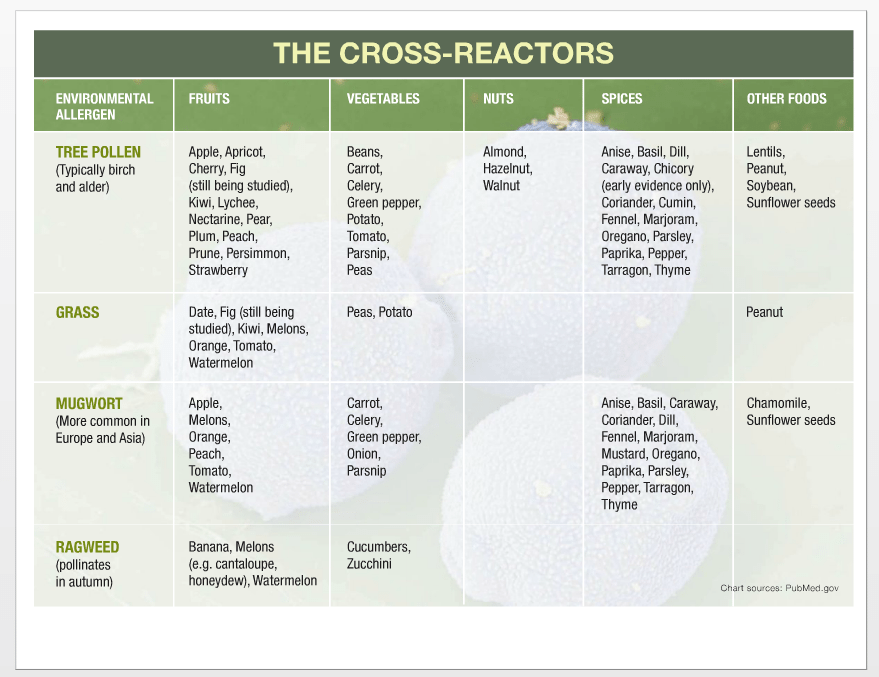
Source: Allergic Living. The Cross-Reactors [chart]. Summer 2015, p. 39. View original chart . (3)
Important:
Swelling of the tongue or throat, difficulty breathing, or other signs of a severe allergic reaction require urgent medical attention. If you have experienced a serious allergic reaction, seek appropriate medical care rather than attempting to manage it through dietary changes alone.
The Gut-Immune System Connection
Another area of interest when it comes to food sensitivities is gut health.
Our digestive tract and immune system are closely connected. Factors such as inflammation, changes in the gut microbiome, and disruptions to the intestinal barrier can influence how the immune system interacts with substances passing through the digestive tract.
The term “leaky gut” is often used to describe increased intestinal permeability, where the barrier between the contents of the digestive tract and the rest of the body becomes more permeable than normal.
Research suggests that intestinal barrier function and the gut microbiome can play important roles in immune regulation and inflammation. However, the relationship is complex, and increased intestinal permeability does not necessarily mean that someone has developed food sensitivities (4).
Why does this matter?
The gut is one of the body's major interfaces with the outside world. Every day, our digestive system interacts with food, microorganisms, and countless other substances.
Supporting healthy digestion, a diverse gut microbiome, and the integrity of the intestinal barrier may therefore be an important part of supporting overall immune health.
Histamine & Food Sensitivities
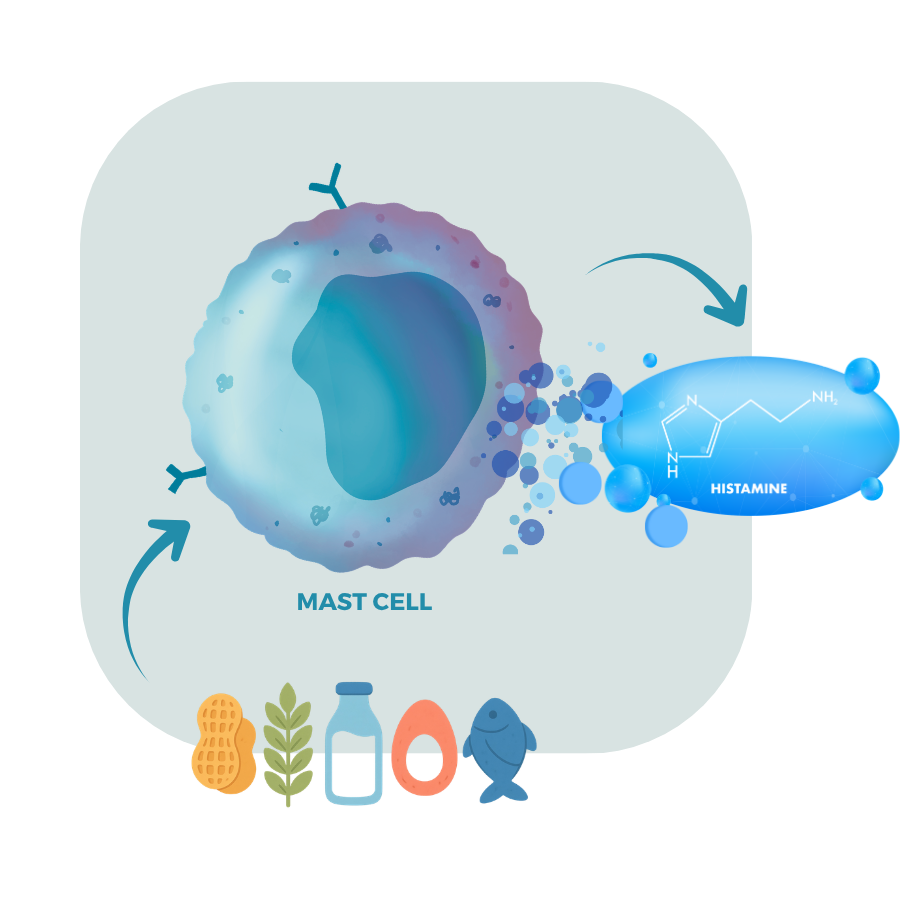
Another piece of the puzzle is histamine.
Histamine is a chemical messenger involved in many functions throughout the body, including the immune response. Mast cells, one type of immune cell, can release histamine as part of an allergic or inflammatory response.
Histamine can also be present in foods, with levels varying depending on the food, fermentation, processing, cooking, and storage methods.
Some people experience symptoms that they associate with histamine-containing foods or have conditions involving altered histamine metabolism or mast-cell activity. Symptoms can vary considerably from person to person and may include:
Flushing or itching
Headaches
Digestive symptoms
Nasal symptoms
Skin reactions
In certain situations, a short-term, individualized low-histamine approach may be considered. This requires careful attention to food choices, preparation, and storage. Fortunately, there are also ways to support overall immune and mast-cell health, depending on the underlying cause of someone's symptoms (5,6).
🌿 Key Takeaways
The relationship between allergies, food, and the immune system can be complicated — but there are several things to keep in mind:
Seasonal allergies can sometimes be associated with reactions to certain foods through a process called cross-reactivity.
Gut health and immune health are closely connected, and supporting digestive health may be an important part of an overall allergy-management plan.
Histamine plays an important role in allergic reactions, and some people may be particularly sensitive to histamine or have conditions involving mast-cell activity.
Not every reaction to food is a food allergy. Different mechanisms can cause similar symptoms, which is why individualized assessment is important.
Dietary changes should be strategic and individualized, rather than unnecessarily restrictive.
🥗 3 Ways to Support Your Allergy & Immune Health
If seasonal allergies or food sensitivities are affecting your quality of life, there are several areas worth exploring:
1. Pay Attention to Patterns
Keep track of when your symptoms occur, what foods you've eaten, and whether symptoms change with the seasons.
Noticing patterns can provide valuable information about potential triggers and whether certain foods may be interacting with your environmental allergies.
2. Support Your Gut
Because the gut and immune system are closely connected, supporting a healthy digestive system can be an important part of an overall wellness plan.
Depending on your individual needs, this may include focusing on a diverse, nutrient-rich diet, supporting healthy digestion, and encouraging a diverse gut microbiome.
3. Look Beyond the Symptoms
Instead of simply trying to suppress symptoms, it can be helpful to ask why your body is reacting in the first place.
A naturopathic approach may consider factors such as environmental exposures, food reactions, digestive health, immune function, and lifestyle factors to create an individualized plan.
Could Food Sensitivities or Seasonal Allergies Be Affecting You?
Did you know that Naturopathic Doctors can provide assessment and testing for environmental allergies and certain food sensitivities?
Dr. Ceilidh enjoys helping patients navigate allergies and food sensitivities using individualized nutrition and lifestyle strategies, along with immune-supportive supplements and herbs when appropriate.
If you or someone you know is struggling with food sensitivities, seasonal allergies, or recurring allergy symptoms, book an appointment with Dr. Ceilidh to explore your symptoms and develop an individualized plan to help you feel your best throughout the year.
References
Sierra-Heredia C, North M, Brook J, et al. Aeroallergens in Canada: distribution, public health impacts,andopportunities for prevention. Int J Environ Res Public Health. 2018 Jul25;15(8):1577.doi:10.3390/ijerph15081577.
Cox AL, Eigenmann PA, Sicherer SH. Clinical relevance of cross-reactivity in food allergy. J Allergy Clin Immunol Pract. 2021;9(1):82–99. doi:10.1016/j.jaip.2020.09.030. Available from: https://pubmed.ncbi.nlm.nih.gov/33429724/
Allergic Living. The Cross-Reactors [chart]. Summer 2015:39. Available from: https://www.allergicliving.com/wp-content/uploads/2016/06/The-Cross-Reactors-chart.pdf
Kinashi Y, Hase K. Partners in leaky gut syndrome: intestinal dysbiosis and autoimmunity. Front Immunol. 2021;12:673708. doi:10.3389/fimmu.2021.673708. Available from: https://pubmed.ncbi.nlm.nih.gov/33968085/
Schnedl WJ, Enko D. Histamine intolerance originates in the gut. Nutrients. 2021;13(4):1262. doi:10.3390/nu13041262. Available from: https://pubmed.ncbi.nlm.nih.gov/33921522/
Valent P, Akin C, Nedoszytko B, Bonadonna P, Hartmann K, Niedoszytko M, et al. Diagnosis, classification and management of mast cell activation syndromes (MCAS) in the era of personalized medicine. Int J Mol Sci. 2020;21(23):9030. doi:10.3390/ijms21239030. Available from: https://pubmed.ncbi.nlm.nih.gov/33261124/